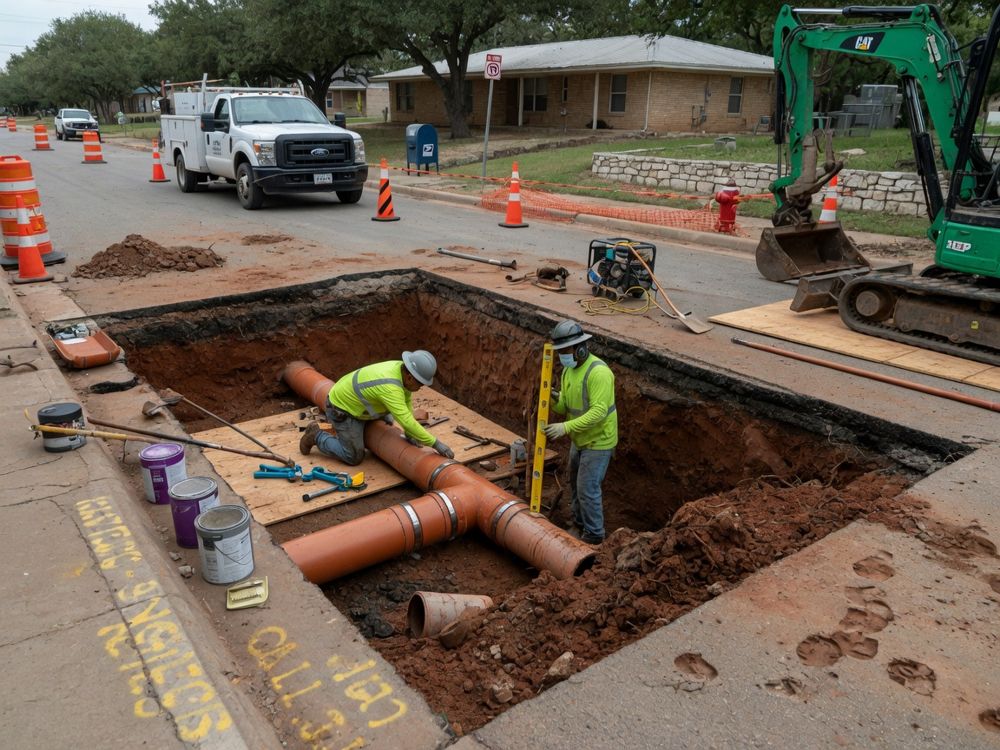
The sewer line is the buried pipe that carries wastewater from the house to the connection at the street or to a septic system. Slow drains, repeat main line backups, sewage odors, damp patches in the yard and soggy ground along the line can all point to damage.
A camera shows whether the line has roots, a crack, a belly where waste settles, an offset joint or a collapse, and how far along the line the damage sits. From there, the repair can range from a targeted spot repair to replacing a longer length. Which one is right depends on the condition of the rest of the line, not only the section that failed.
Whether a less-invasive repair method suits your line depends on the pipe and what is wrong with it. Ask us when you call and we will explain what applies.
Signs you may need sewer line repair
- Repeated main line backups
- Sewage odors indoors or in the yard
- Wet, soft or sunken ground along the line
- Several slow drains at once
- Unusually green or fast-growing patches of lawn along the line
- Gurgling toilets or drains
Common causes
Root intrusion
Roots enter through cracks and joints and grow inside the pipe.
Shifting soil
Expansive clay can move a buried line over many seasons and open joints.
Aging pipe
Older materials can corrode, crack or separate at the joints.
Sags
A settled section holds water and waste and catches debris.
Collapse
A weakened pipe can collapse and block the line entirely.
Outside damage
Digging or heavy loads over a shallow line can crack or crush it.
Sewer line work
Camera diagnosis
A camera shows what is wrong inside the pipe and how far along the line the damage is. It is the starting point for any sewer repair.
Spot repair
Where the damage is limited, only that section is exposed and replaced.
Tree root removal from sewer lines
Tree roots look for moisture and can enter a sewer line through small cracks and joints. Once inside they grow into a mass that narrows the pipe and catches paper and grease. Removing the roots clears the line, but if the entry point is not repaired they usually return. A camera shows where they are getting in so the repair can be aimed at the cause.
Sag and belly correction
A low spot is exposed and the pipe is reset to the right slope.
Collapsed line repair
A collapsed length has to be replaced. The camera shows where the collapse starts and ends.
Sewer line replacement
Replacement makes sense when damage is widespread, the pipe has collapsed in several places, or repeated spot repairs would cost more than renewing the run. It is a bigger job with more cost and disruption, so we want the camera evidence in hand before recommending it, and we explain why it is the better option.
What you need to do before we arrive
Stop using water
If the line is backing up, every extra gallon makes it worse.
Find the cleanout
It gives us a way to put a camera into the line.
Mark what you know
If you know where the line runs, from plans or an earlier repair, tell us.
Clear the yard and driveway access
Move vehicles, planters and items where excavation might be needed.
Call 811 before any digging
Utility lines are buried near sewer lines, so call 811 before digging.
Gather history
Age of the home, earlier backups, earlier repairs and trees nearby.
How sewer line repair works in Buda, TX
Inspect
We run a camera through the line from the cleanout or nearest access.
Diagnose
We identify what is wrong and where, and how the rest of the line looks.
Recommend
We explain the options and why we recommend one: spot repair, longer replacement, or in some cases cleaning with monitoring.
Repair
We carry out the agreed work.
Check
We confirm the line flows freely and talk through any restoration of the surface.
What to avoid, and how to prevent repeats
Avoid
- Waiting on a recurring main line backup. It usually points to damage.
- Repeated cable cleaning on a line that a camera has not looked at.
- Digging yourself without locating utilities.
- Planting a tree directly over the sewer line.
- Deciding on replacement without seeing the camera findings.
To prevent repeats
- Keep trees and shrubs away from the sewer line.
- Flush only toilet paper, and keep grease out of the drains.
- In an older home, have the line inspected before problems appear.
- Note any small changes, such as a new gurgle or a damp spot, and call early.
What sewer line repair typically costs
| Job | Typical range | Real cost |
|---|---|---|
| Camera inspection | $200 - $500 | Call for an estimate |
| Spot sewer repair | $1,500 - $5,000 | Call for an estimate |
| Longer sewer line replacement | $4,000 - $15,000+ | Call for an estimate |
These ranges are general guides only and are not a quote. The actual cost depends on the pipe, the access and the cause, so call for an estimate.
What changes the price
- Depth and length of the line
- Pipe material
- What is above the pipe: lawn, driveway, slab or landscaping
- Number of damaged sections
- Whether replacement is needed
- Restoration after the work