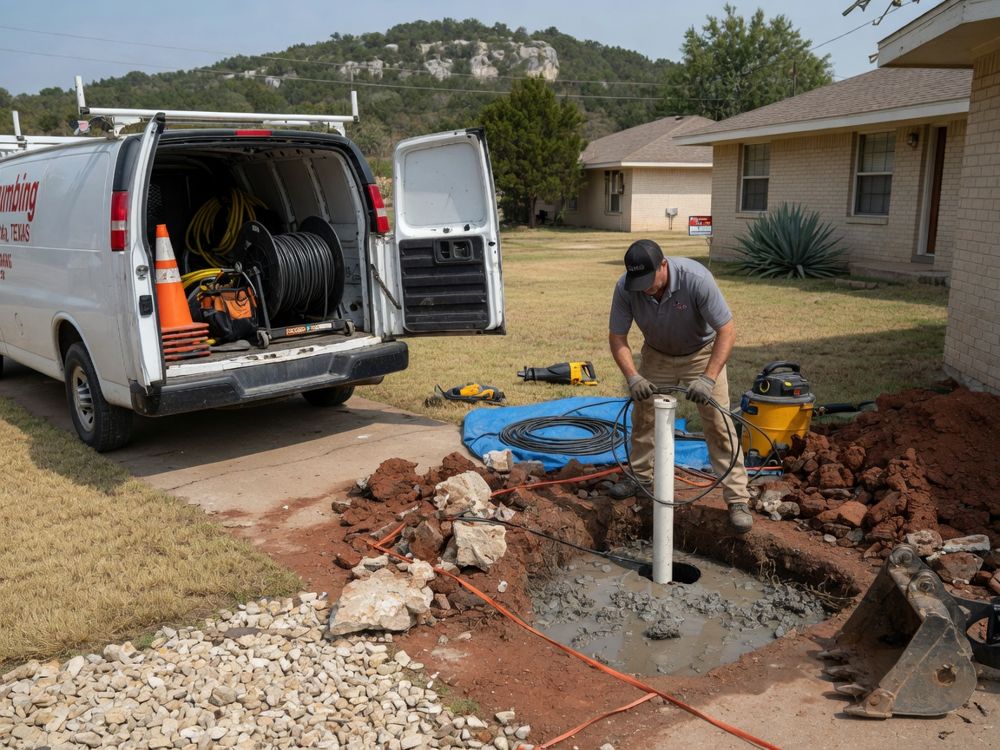
Most blockages start small. Grease coats the pipe wall, hair binds with soap residue, paper and wipes collect at a bend. The drain slows, then one day it stops. Drain cleaning removes the blockage and, done properly, tells you why it formed.
The method depends on where the blockage sits and what it is made of. A single slow fixture is usually a local problem near the drain. When several fixtures slow together, or a floor drain gurgles when the washing machine runs, the blockage is deeper in the system and the approach changes.
If the clog was a one-off, cleaning is the end of it. If it keeps coming back, we will say so and suggest what to check next, instead of selling the same service twice.
Signs you may need drain cleaning
- A sink, tub or shower that drains slowly
- Standing water after use
- Gurgling sounds from a drain
- A smell that returns after cleaning the trap
- Water backing up into a second fixture when one drains
- A toilet that clogs more than occasionally
Common causes
Grease and food waste
Fats cool and harden on the pipe wall, narrowing it until food scraps catch. This is the usual cause in kitchen lines.
Hair and soap scum
Hair binds with soap residue near the fixture and slowly closes the drain in tubs, showers and bathroom sinks.
Wipes and paper products
Wipes labeled flushable do not break down like toilet paper. They collect at bends and joints.
Mineral and scale buildup
Deposits can build up on the inside of a pipe over time and narrow it.
Foreign objects
Toys, cotton products and other items get washed or flushed into drains.
A problem in the pipe
Roots, a sag or a damaged joint can make clogs return. Cleaning clears the symptom; a camera shows the cause.
Drains we clean
Drain clearing
Drain clearing removes the blockage so water flows again. It starts with working out where the blockage is, then using the method that fits: a cable for an ordinary clog, or a method that scours the pipe wall for buildup.
Kitchen sink drains
Grease, food waste and soap residue are the usual causes. Kitchen lines are often cleaned from the sink or the nearest access.
Bathroom sink drains
Hair, toothpaste and soap scum collect in the trap and the pipe just past it.
Bathtub and shower drains
Hair and soap scum are the usual causes. The blockage is often close to the drain opening.
Floor drains
Floor drains in basements, garages and laundry rooms can fill with debris, and they are often connected to the main line.
Laundry drains
Lint, soap and fabric fibers can block a washing machine standpipe or its drain line.
Toilet blockages
A toilet that will not clear may have a local blockage or a deeper line problem. We determine which.
Branch line cleaning
A branch line carries several fixtures. A blockage here shows up in more than one place.
Drain snaking
A drain cable, often called a snake, is a mechanical way to break through or pull out a blockage. It is quick and effective for many ordinary clogs in sinks, tubs and branch lines. It opens a path through the blockage, so for buildup along the pipe wall, such as grease or scale, hydro jetting is often the better match.
What you need to do before we arrive
Stop using the drain
Running more water into a blocked drain can make it overflow.
Check how many drains are affected
One fixture usually means a local clog. Several point to the main line, which is a different job.
Remove standing water if you can
Bail water from a sink or tub into a bucket so the area is easier to reach. Do not use it if chemical cleaner has been added.
Clear the area
Empty the cabinet under a sink and move rugs and items near the drain.
Do not add chemical cleaner
Tell us if you already did. It matters for safety and for how we work.
Know where your cleanout is
If the problem looks deeper than one fixture, the cleanout is where the main line is reached.
How drain cleaning works in Buda, TX
Call and describe the drain
Tell us which fixtures are affected, how long it has been slow and what you have already tried.
Work out where the blockage is
Whether it is at the fixture, on a branch line or in the main line decides the method.
Clear the line
We use the method that fits: a cable for an ordinary clog, jetting for buildup along the pipe wall.
Test the drain
We run water to confirm the fixture flows freely and that nothing else is backing up.
Advise on repeats
If the cause looks like a pipe problem, we tell you and suggest the next step.
What to avoid, and how to prevent repeats
Avoid
- Relying on chemical drain cleaners. They can damage some pipes and leave a hazard for the next person to work on the drain.
- Pouring grease or oil down the kitchen sink, even with hot water. It cools further down the line and builds up.
- Flushing wipes, even those labeled flushable.
- Using a rigid wire or a long cable on a drain without knowing what is in the line. It can scratch or damage the pipe.
- Ignoring a drain that clogs again within weeks. That is a sign of a cause that cleaning will not remove.
To prevent repeats
- Wipe grease from pans into the trash before washing.
- Use a hair catcher in tubs and showers.
- Flush only toilet paper.
- Run hot water for a short time after using the kitchen sink for greasy dishes.
- If a drain clogs repeatedly, have the line inspected instead of repeating the clearing.
What drain cleaning typically costs
| Job | Typical range | Real cost |
|---|---|---|
| Single sink, tub or shower drain | $125 - $350 | Call for an estimate |
| Floor drain or branch line | $200 - $500 | Call for an estimate |
| Follow-up cleaning after a repeat clog | Varies | Call for an estimate |
These ranges are general guides only and are not a quote. The actual cost depends on the pipe, the access and the cause, so call for an estimate.
What changes the price
- Which drain is blocked, a fixture or a main line
- How far along the line the blockage is
- What the blockage is made of
- Whether a cleanout gives access
- The method needed: cable or hydro jetting
- Whether a camera inspection is needed to find the cause