Over time, grease, soap, scale and debris coat the inside of a pipe and narrow it. A cable opens a path through a blockage but can leave much of that coating behind, which is why some lines clog again soon after being cleared.
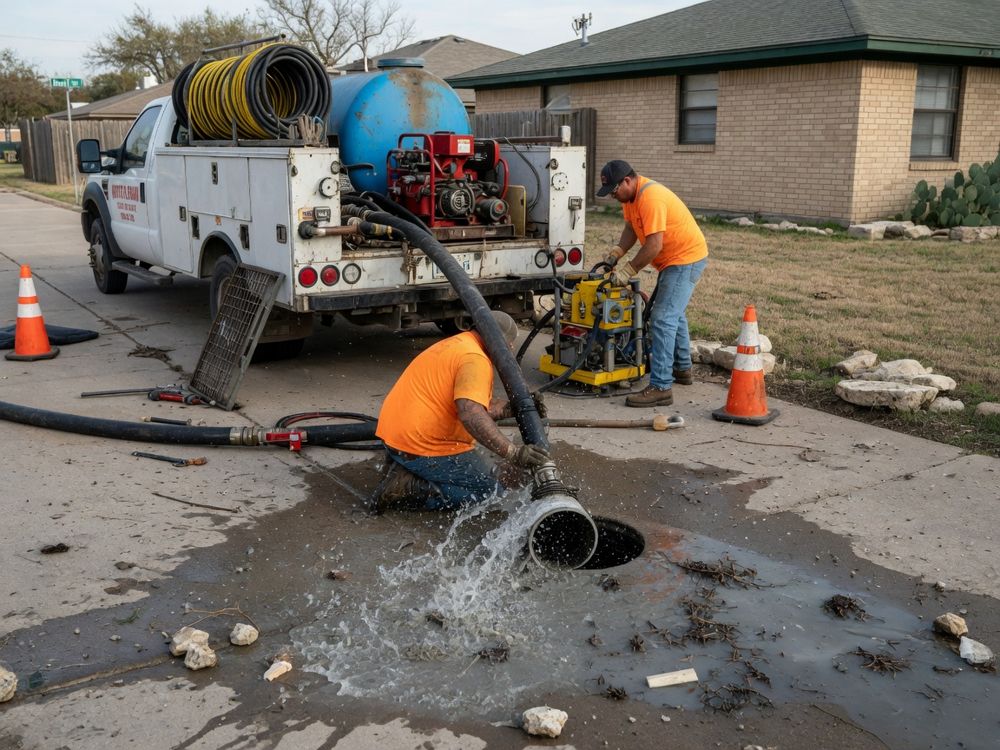
Jetting sends pressurized water through a nozzle that scours the pipe wall as it moves along, flushing the loosened material out. It suits lines with recurring grease buildup, heavy debris or scale, and is commonly used on main lines and commercial kitchen drains.
Jetting is not right for every pipe. A camera check first confirms the pipe can handle it, because a cracked or collapsed line needs repair, not pressure.
Signs you may need hydro jetting
- A line that clogs again soon after a cable
- Grease buildup in a kitchen or main line
- Slow drains throughout the house
- Heavy debris or scale along the pipe wall
- A commercial kitchen drain that keeps slowing
- A line that smells even after clearing
Common causes
Grease
Fats solidify on the pipe wall and collect solids.
Soap and scum
Soap residue builds in layers.
Mineral scale
Deposits can build up and narrow the pipe.
Accumulated debris
Material left behind after cable cleaning builds up again.
Light root growth
Fine roots can sometimes be cleared by jetting, though heavy roots may need cutting first.
Where we use hydro jetting
Main line jetting
Cleans the main sewer line along its length, not just through the middle.
Kitchen and grease line jetting
Cleans grease buildup from kitchen drain lines, including small commercial kitchens.
Scale and buildup removal
Removes mineral and soap buildup from the pipe wall.
Light root clearing
Fine roots can often be flushed. Heavy roots may need cutting first, and the entry point needs repair.
Sewer line cleaning with hydro jetting
Pressurized water cleans the full length of a sewer line, which suits lines with grease, scale or heavy debris where a cable only opens a path.
Maintenance jetting
For lines that build up regularly, scheduled jetting can keep them clear.
Camera check before and after
A camera confirms the pipe can take jetting and that it worked.
What you need to do before we arrive
Find the cleanout
Jetting is usually done through the cleanout.
Clear access
Move vehicles and items away from the cleanout and the work area.
Stop using water
Keep the line clear while the work is done.
Tell us about the line
Age, material if you know it and earlier problems.
Expect a pre-check
We may recommend a camera look first to be sure the pipe suits jetting.
How hydro jetting works in Buda, TX
Inspect first
A camera check confirms the line can handle jetting.
Set up
The jetting hose is fed into the line through the cleanout.
Jet the line
Pressurized water scours the pipe wall and flushes out the debris.
Verify
We check the flow and, where it helps, run the camera again.
What to avoid, and how to prevent repeats
Avoid
- Jetting a pipe that is cracked or collapsed. Pressure can make it worse.
- Assuming jetting fixes a damaged line. It cleans; it does not repair.
- Skipping the camera check on an old or unknown line.
- Expecting one jetting to last forever if grease keeps going down the drain.
To prevent repeats
- Keep grease and oil out of the kitchen drain.
- For heavy-use lines, ask about scheduled maintenance cleaning.
- Use strainers and scrape plates before washing.
What hydro jetting typically costs
| Job | Typical range | Real cost |
|---|---|---|
| Residential hydro jetting | $350 - $900 | Call for an estimate |
| Commercial or kitchen line jetting | Varies | Call for an estimate |
| Camera inspection before jetting | $200 - $500 | Call for an estimate |
These ranges are general guides only and are not a quote. The actual cost depends on the pipe, the access and the cause, so call for an estimate.
What changes the price
- Length and size of the line
- How heavy the buildup is
- Access through a cleanout
- Residential or commercial kitchen line
- Whether a camera check is added