One clog or a pattern?
A single clog after something specific, like a handful of hair or a lump of food waste, is normal. A pattern is different. Ask yourself three questions:
- Has the same drain slowed or stopped more than once in the last few months?
- Did cleaning help for only a short time?
- Is more than one fixture affected, or does a second fixture gurgle when this one drains?
If you answered yes to any of these, treat it as a pattern. The rest of this guide helps you narrow down why.
Match the symptom to the likely cause
Where the clog happens tells you a lot. Use this table as a starting point, not a diagnosis.
| Where it clogs | Most likely cause | What to do first |
|---|---|---|
| Kitchen sink only | Grease and food waste built up on the pipe wall | Clean the trap, stop pouring grease down the drain, and consider cleaning that scours the pipe |
| Bathroom sink only | Hair, toothpaste and soap scum in the stopper and trap | Pull the stopper and clean the trap |
| Tub or shower only | Hair bound with soap residue near the drain | Remove and clean the drain cover, then clear the hair |
| One toilet only | Too much paper, a flushed item, or a problem at the toilet itself | Plunge with a flange plunger |
| Floor drain | Debris at the drain, or a deeper line problem | Check whether other drains are also slow |
| Two or more fixtures | A blockage or damage in a shared branch or the main line | Stop adding water and get the line looked at |
| Same drain, again and again | Buildup, roots, a sag or a damaged joint in the pipe | Stop repeating the clearing and find the cause |
The usual causes, explained
Grease and food waste
Fats and oils leave the kitchen as liquid and cool inside the pipe, where they stick to the wall. Each wash adds a little more. Food scraps catch on the sticky layer and the pipe narrows until it blocks. This is the most common reason a kitchen drain returns. A cable can punch a hole through the middle of the buildup, but the coating stays on the pipe wall, which is why the drain slows again within weeks.
Hair and soap scum
Hair is strong and does not dissolve. In tubs and showers it binds with soap residue near the drain opening and slowly closes it. This clog is usually close to the fixture, which makes it the easiest kind to fix and the easiest to prevent with a hair catcher.
Wipes and non-flushables
Wipes sold as flushable do not break down the way toilet paper does. They collect at bends and joints, bind with other debris and can block the main line. Paper towels, cotton products and similar items do the same.
Tree roots
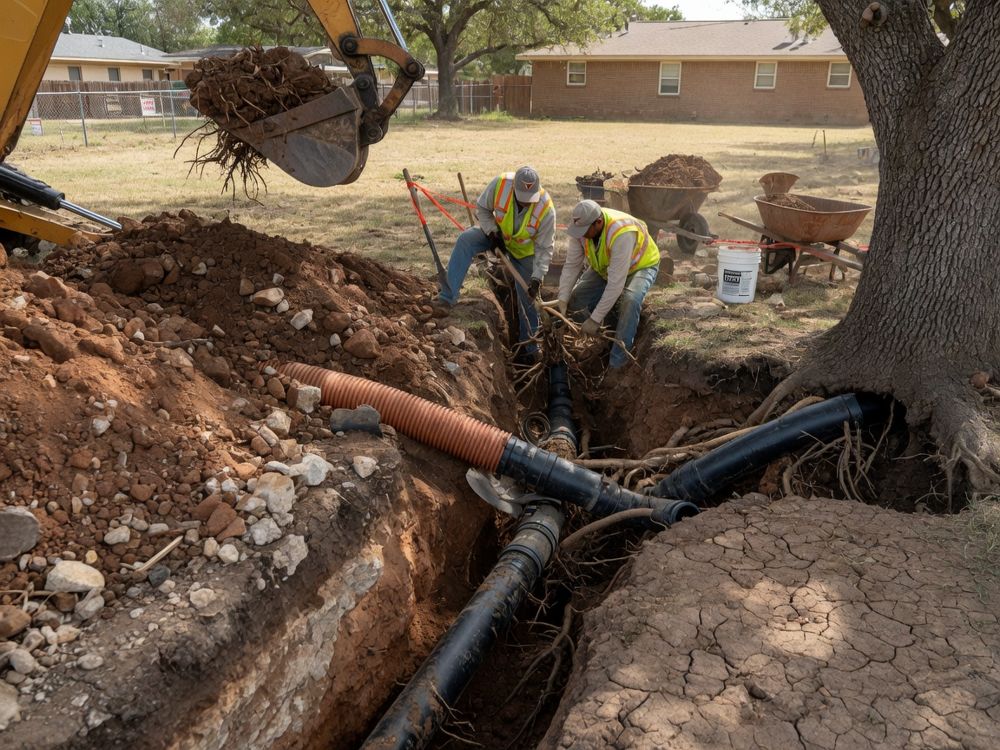
Roots look for moisture. A tiny crack or loose joint in a buried line lets them in, and once inside they grow into a mass that narrows the pipe and catches paper and grease. Clearing the roots restores flow for a while, but unless the way in is repaired, they return.
A sag in the line
A buried pipe can settle and develop a low spot, sometimes called a belly. Water sits in the dip, and solids settle there instead of washing through. The result is a clog in the same place every time, however well you clean it.
A rough or offset joint
Where two pipe sections no longer line up, or a joint has pulled apart, the edge snags paper and grease. Soil movement over many seasons can cause this. In parts of Hays County the soil contains expansive clay that swells when wet and shrinks when dry, and conditions vary even between neighboring lots.
Scale and mineral buildup
Mineral deposits can build up inside some pipes over time and narrow them, which makes ordinary debris more likely to catch.
A vent problem
Plumbing vents let air into the system so water can flow. A partly blocked vent can make drains gurgle and run slowly. It is a less common cause but worth remembering when the pattern does not fit anything above.
What you can safely try yourself
For a single fixture with no sewage smell or backup, these steps are reasonable first moves.
Clear the visible debris
Remove the stopper or drain cover and pull out hair and residue by hand, using gloves.
Use a plunger correctly
Cover the cup with enough water to seal it. For a sink or tub, block the overflow opening with a wet cloth. Push and pull steadily for about 20 seconds. Use a flange plunger on a toilet.
Clean the trap under a sink
Place a bucket underneath, loosen the slip nuts by hand and empty and rinse the trap. Reassemble it carefully and check for leaks.
Flush with hot tap water
Hot water from the tap can loosen light grease. Avoid pouring boiling water down drains, because it can soften or damage some pipe materials.
Baking soda and vinegar can help with odors but are not strong enough to clear a serious blockage.
What to avoid
- Chemical drain cleaners. They can damage some pipes, are hazardous on skin and, if they fail, leave caustic water standing in the drain for the next person to work on.
- Plunging when chemical cleaner is sitting in the water. It can splash back.
- Pushing a rigid wire or a long cable into a line you cannot see. It can scratch or damage the pipe.
- Repeating the same fix every few weeks without asking why.
When it is a pipe problem, not a drain habit
These signs suggest the cause is in the pipe and no amount of home clearing will fix it:
- The drain clogs again within weeks of being cleared.
- More than one fixture is slow, or a toilet gurgles when you run a sink.
- A sewage smell indoors or in the yard.
- Wet, sunken or unusually green patches of lawn along the line.
- The clog is deep in the line, past where a household plunger or short cable reaches.
How a professional finds the real cause
The right approach is to confirm what is wrong before choosing a fix:
Describe the pattern
Which fixtures, how often, and after which activities. This points to the section of line involved.
Clear the blockage
A cable opens a path through an ordinary clog. For buildup along the pipe wall, hydro jetting cleans the wall with pressurized water.
Look inside the pipe
A camera shows roots, cracks, offsets, sags and buildup, and where along the line they are. It is the step that turns a repeat clog into a specific diagnosis.
Choose the fix that matches
A habit change if the pipe is sound, a different cleaning method if it is buildup, or a repair if the pipe is damaged.
Which fix for which cause
| Cause found | What fixes it |
|---|---|
| Grease or soap buildup on the pipe wall | Hydro jetting or a scouring clean, plus a change in what goes down the drain |
| Hair at the fixture | Clearing the trap and fitting a hair catcher |
| Wipes or paper products | Clearing the line and stopping them going down the drain |
| Roots in the line | Clearing the roots and repairing the place they entered |
| A sag or belly | Exposing and resetting that section of pipe |
| A damaged or offset joint | Spot repair of the joint or the section |
| A collapsed section | Replacing the failed length |
How to stop the clog coming back
- Wipe grease from pans into the trash before washing.
- Use a drain screen in the kitchen and a hair catcher in the shower.
- Flush only toilet paper.
- Run hot tap water briefly after greasy dishes.
- Do not keep clearing a repeat clog. Note the pattern and have the line inspected.
- In an older home, consider a camera inspection before problems appear.
What it costs to fix a repeat clog
The cost depends on the cause, not the symptom. Clearing a drain with a cause assessment is a small job. Repairing a damaged pipe is larger. General ranges for each kind of job are on our clogged drain repair and drain cleaning pages, and the real price comes from an estimate. Call (512) 729-9513 and describe the pattern.
Frequently asked questions
Why does my kitchen sink keep clogging?
Why does my shower drain keep clogging?
Do drain cleaners actually work?
How do I know if tree roots are the cause?
Can a clog come back because of a vent?
When should I call a professional?
Related services
Where we help
We take calls from Buda and nearby communities, including Kyle, Uhland, Manchaca, Creedmoor, San Marcos and more. See all service areas.